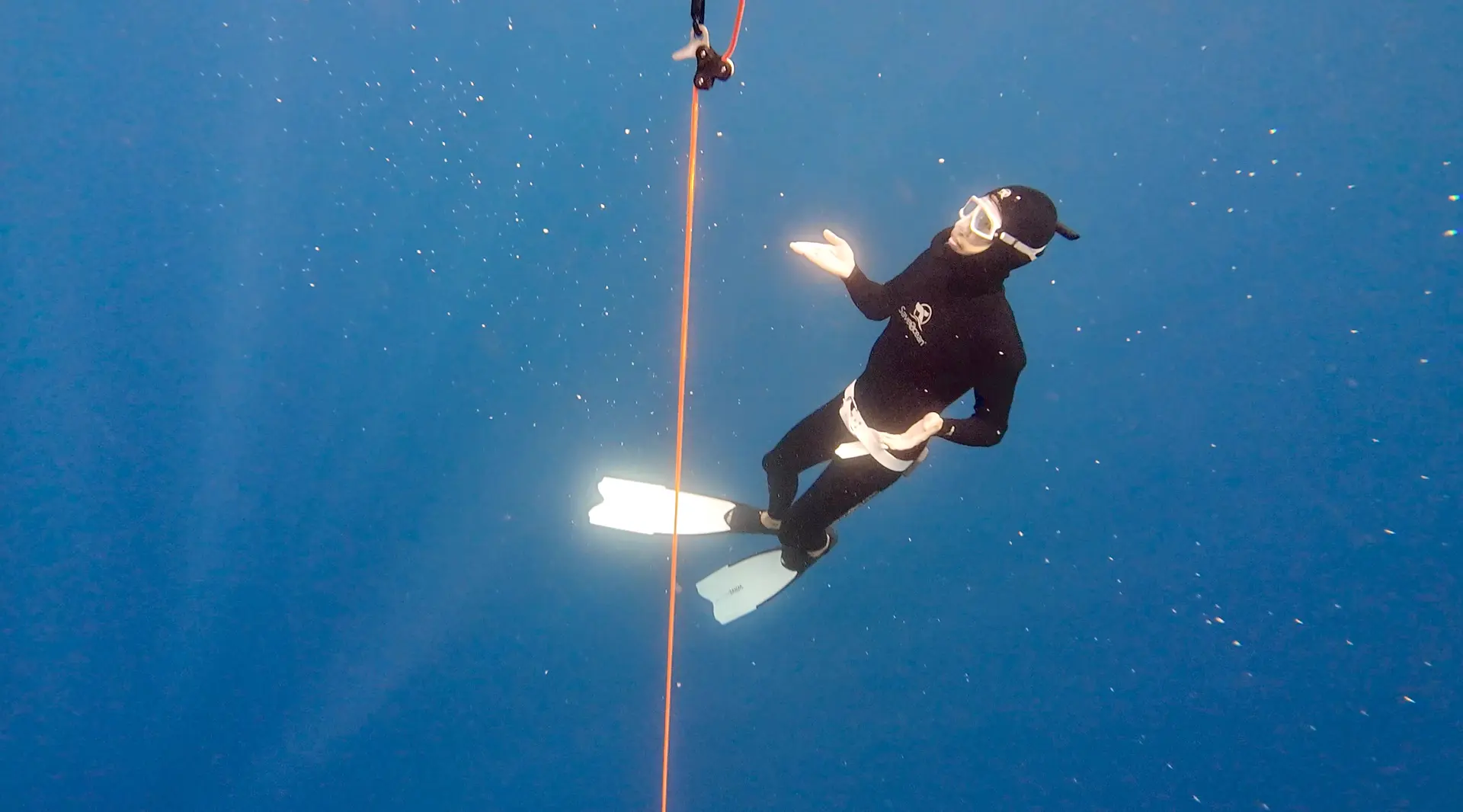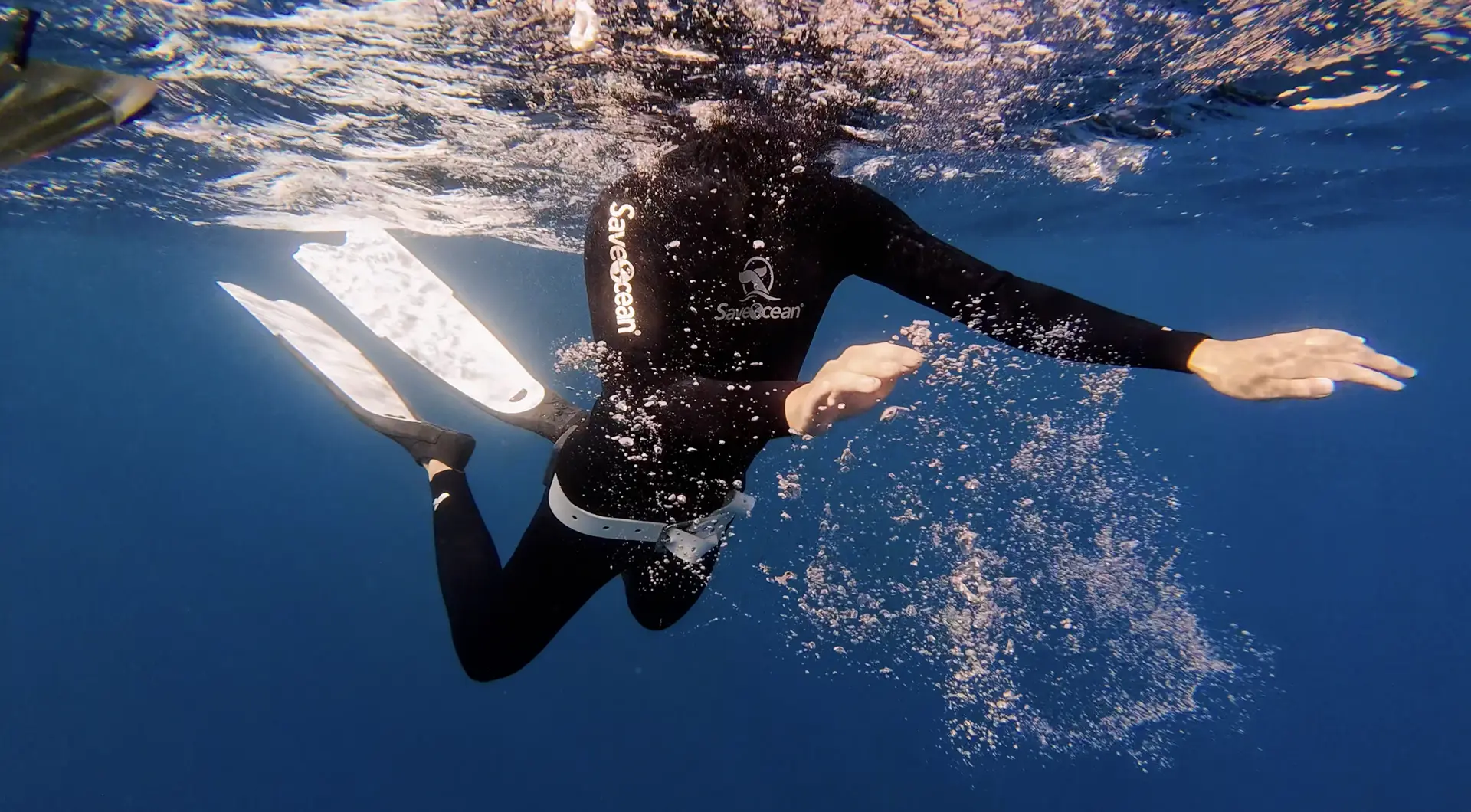
We came to Dahab for a holiday this time, and I signed up for the freediving Wave 1 course, which is the beginner level. However, I ultimately could not complete all the requirements because my ears suffered some injury due to pressure equalization problems. Consequently, I have to wait for a future opportunity to retake the exam.
This is a true story. It is not a complete epic of heroism, nor does it have a dramatic plot where I overcome difficulties and fears to finally reach a happy ending.
One training day, the wind and waves were very strong, especially as we swam back to shore at the end of the session. The wind blew towards the land while the waves curled and crashed in the same direction. The sand on the seabed was stirred up like a dust storm, making the water completely murky. My snorkel became almost useless as it flooded every few meters, and I swallowed several mouthfuls of seawater. Pah, pah, pah, it was incredibly salty. It was a bitter saltiness that numbed my mouth and made my taste buds feel like a burden. I was worried about hurting my stomach, so I had not taken motion sickness pills beforehand, but I regretted that decision after floating for a while. My body’s internal regulation simply could not keep up with the churning of the waves and failed. My stomach turned upside down, and about ten meters from the shore, I finally vomited. Since I had not eaten much before, nothing really came out. It was just a muscle spasm and a token gesture. I am sorry to disappoint the fish in the sea because you lost out on a delicious meal. Scrambling, I finally inched my way to the shore. The seawater pounded against the coastal reef and whipped up huge waves. We stumbled, dragged, and pulled each other until we finally stood on dry land. Looking back at the white-capped waves, I felt a lingering fear mixed with a sense of wonder about what kind of terrifying thing I had just been fighting against.
After several months of intermittent practice and testing it in the sea, I can confidently say that I have indeed learned Frenzel equalization. Mastering this technique depends entirely on fate, specifically whether you have been “chosen” by Herman Frenzel, the man who invented this technique. Those who are chosen can learn it in a few hours, whereas those who are not must spend months. Perhaps my name is too hard to pronounce, but unfortunately, I was not chosen, so I spent several months learning and verifying whether I had actually mastered it. All the parts involved are hidden beneath the skin and are concentrated around the nose and mouth. If you cannot distinguish the movement of the internal muscles, it feels like a plate of spaghetti is coiled inside your face. It is not only intricate but also covered in cheese, making it sticky and messy. It took me a long time to identify where the soft palate is, which part is the middle ear, and where the vocal cords are located. After dismantling this plate of pasta, I finally gained a clear understanding of my facial anatomy and realized how terrible my equalization technique had been last year and the year before. My technique was wrong the moment I entered the water. I could not equalize my ear pressure, and it hurt when the pressure increased, yet I did not know what was happening. At one point, I even suspected my ears were disabled and thought I might have to say goodbye to diving forever. From my current understanding, the old me was simply extremely lacking in self-awareness. Therefore, even though I harbor some regrets, I will not force myself to finish all the items. After all, an injury is an injury, and since I can physically feel it, the only thing I can do is wait until I recover to find a chance to try again in the future.
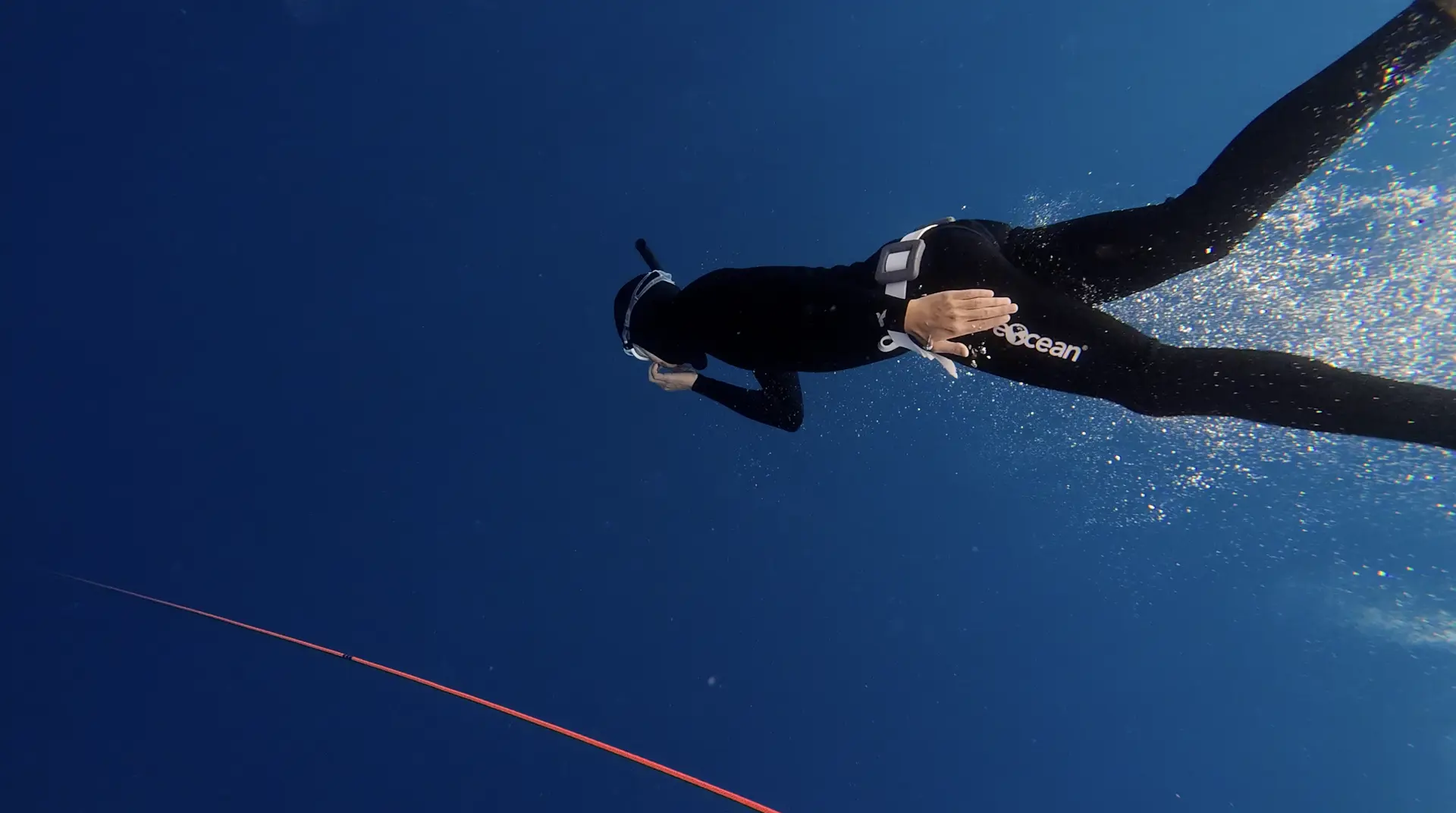
It is hard to say what I was fighting against. Maybe it was myself, or maybe it was the sea, but I cannot describe exactly what was stopping me from diving deeper even though I had enough air and my ear pressure was properly equalized. I want to argue that it was pure panic. My body twitched on its own. I felt it, and I felt like I could not make it, so I came up. However, an abstract explanation probably will not convince others because it is not a visible problem. To put it bluntly, it is a mental issue. Abstract problems naturally get abstract answers, and the final conclusion is simply: do not panic, just go down and do it. I am satisfied with this answer. In terms of personality, I am the type who stands there screaming that it is all over and I am doomed even when danger is ten thousand miles away. Being extremely cautious means that even if I try my hardest to “court death,” the result is usually just a scrape. My skin might “die,” but I remain very much alive. My mental will seems unable to make me a true adventurer.
Beneath the surface, it is relatively calm. The body is wrapped and squeezed by water from all directions, and time becomes strangely distorted. Sometimes when watching videos, I would see beginners enter the water kicking their fins like they were pedaling a tricycle, their legs spinning rapidly. I would lie in bed laughing at their strange movements and thinking I would be fine, but when I actually got into the water, reality slapped me in the face because I was pedaling my little tricycle just as vigorously. Later analysis showed that I was too nervous. My attention was entirely on other muscles, and I could not care less about my legs, so my subconscious chose the fastest kicking posture, which is cycling. Although it feels fastest for the body, it is the least efficient method underwater. The body’s intuition does not conform to the common sense of this new world. To become a native of this new world, the body needs to learn new etiquette. One important rule of etiquette is slow and rhythmic movement. Equalization must be soothing and rhythmic, kicking fins should be slow and powerful, and the body must be adjusted slowly to ensure correct posture. You cannot be a sloppy young person. You must be a precise and powerful grandmother.
Ka, ka, ka, rather than kakaka.
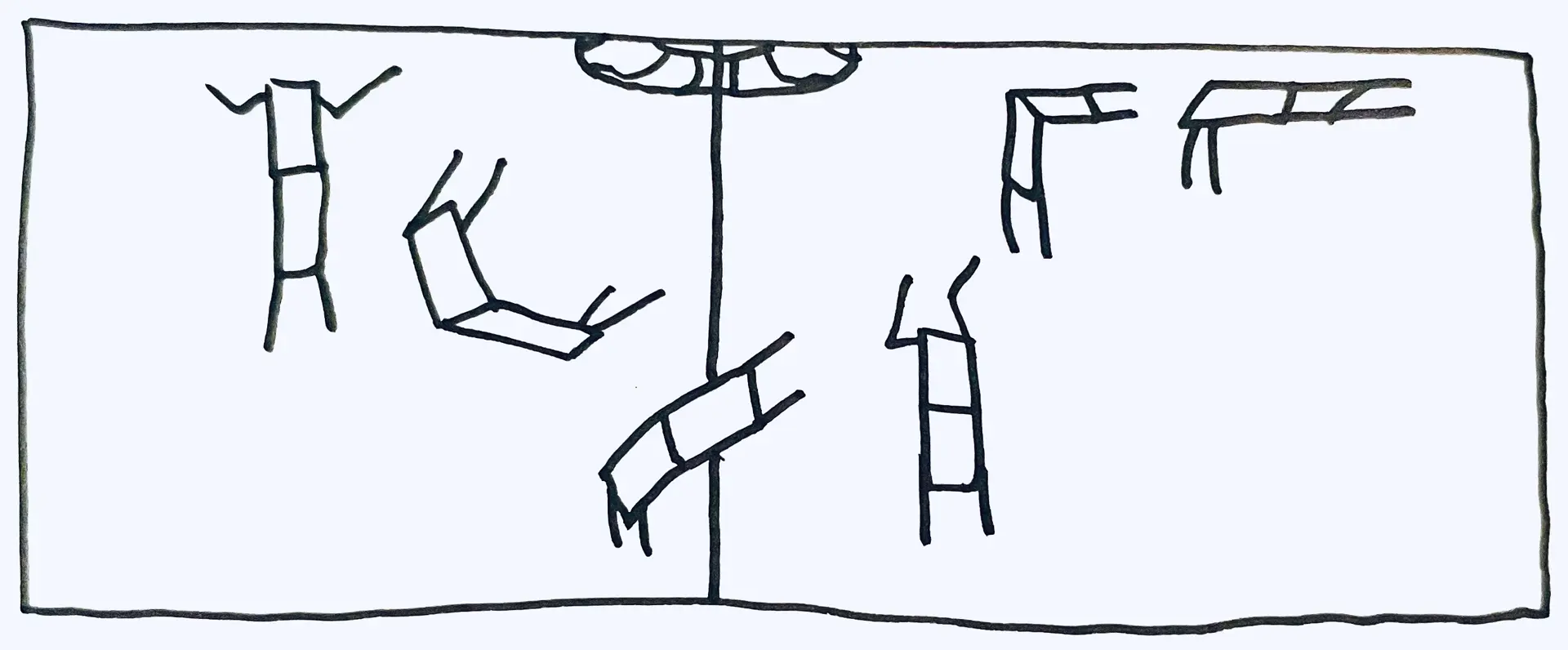
The standard process sounds tempting, but it really depends on the right timing, favorable location, and harmonious people. A calm sea surface, warm and gentle sunshine, and a well-rested diver make absolutely the best combination. Every detail of movement is sorted and combined in the correct way, and then displayed at the right moment. The body perceives it and controls it. Oh heavens, it is wonderful. Of course, this is the ideal situation. In reality, my body is more like a chaotic amateur troupe where various movement elements become very disordered and unknowable because they are manipulated by fear and tension. Sometimes I focus on breathing and forget to kick, and by the time I remember to kick, my body has already crashed into the rope. The upper body and lower body seem to be two separate systems. Not only do they have their own ideas, but they are also hostile to each other. The general in my mind becomes numb and entranced due to fear, unable to play its proper role, and the body thus becomes a mere shell.
Space also becomes strange. Usually, we live in a planar space where we can only move forward, backward, left, and right. Even if we jump up, we can only raise ourselves a little bit. However, once underwater, forward, backward, left, and right are not very important. Instead, you need to control moving up and down. If feet are down and head is up, it means you have to travel upwards for tens of meters. As mentioned above, the feet are very important as the power source. They need to work stably and effectively. Body posture is another key point. It needs to be slightly straight, with hips thrust forward and buttocks tightened. The arms and head act as guides, leading the rocket to launch in the correct direction. Later, I reviewed my own movements. I did not look like a rocket but rather like a nimble dead fish, either spinning inexplicably around the rope or turning horizontal and being pushed back to the surface by strong pressure. From this perspective, if I were the instructor, I would be very reluctant to admit that these were the movements of a proper beginner. I collected all the relevant videos in a folder and named it “Collection of Idiotic Behaviors,” which I feel is quite appropriate.
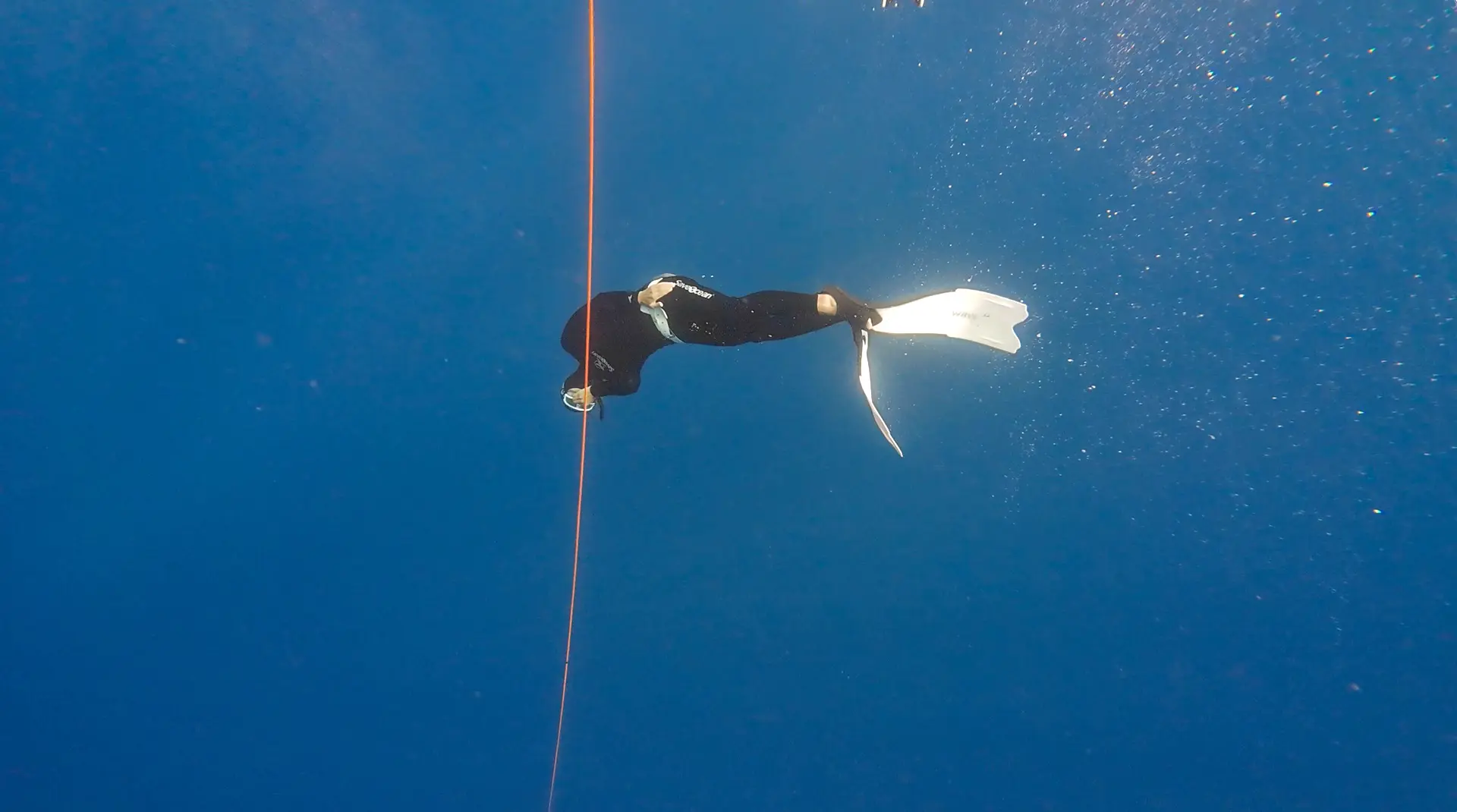
Correct movement is no longer just a written theory but has particularly strong practical significance. Our experienced Instructor A once mentioned that after solving many small problems correctly, the whole will not go wrong. I think he is right. Some movements felt extremely weird to me, but after the small problems were corrected, the movements surprisingly became much smoother. The underwater world is like a relatively ideal sandbox environment where default parameters are reset every time you enter the water. As long as you operate and run your body with the correct steps and processes, you will always get the correct result in this environment.
Getting used to floating on the sea makes it less scary. Although the bottom of the sea is deep and invisible, I cannot reach it anyway, so the fear is mostly visual. I like the mask treated with shower gel because it is clear, transparent, and fog-free. When the sunlight penetrates, there is a touch of bright orange amidst the pure blue, which is the color of the guide rope. Of course, it could be other colors, but I quite liked the small orange rope from these training sessions. Once or twice, I saw a small creature passing by. I do not know its name, but it looked like a type of miniature jellyfish. Its body was long and transparent, and its vital organs were orange-red, wrapped small inside the transparent body, with wispy tendrils underneath. It floated away gracefully with the current right before my eyes.
I watched it, fascinated. This was a fantasy moment unique to the ocean.
I am leaning back on a soft sofa, which is solid and stable, yet my body still feels the rising and falling motion just like the undulation of the waves. It is still affecting my body’s sensors at every moment, which is quite amazing. I think this will drive me to try diving again.