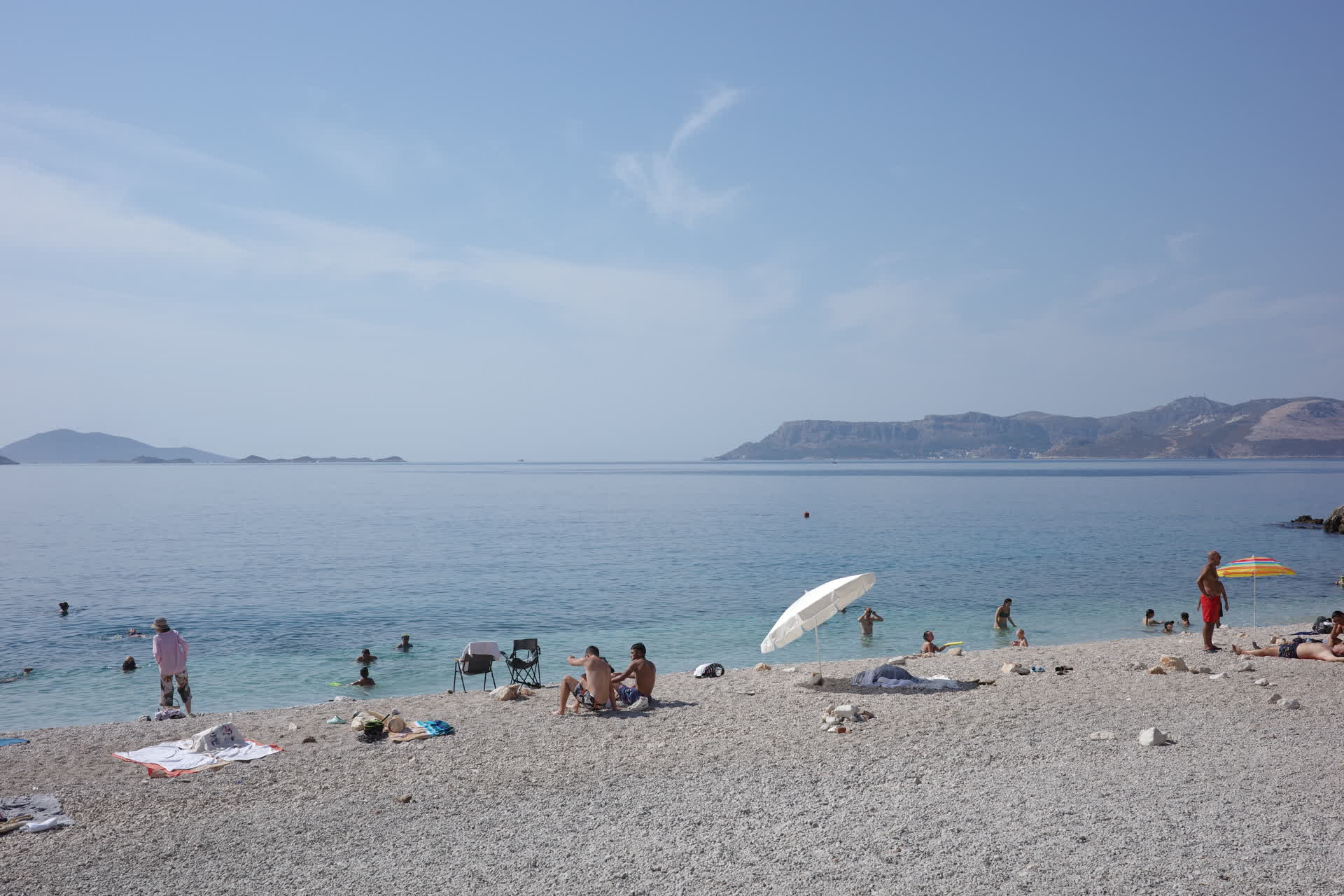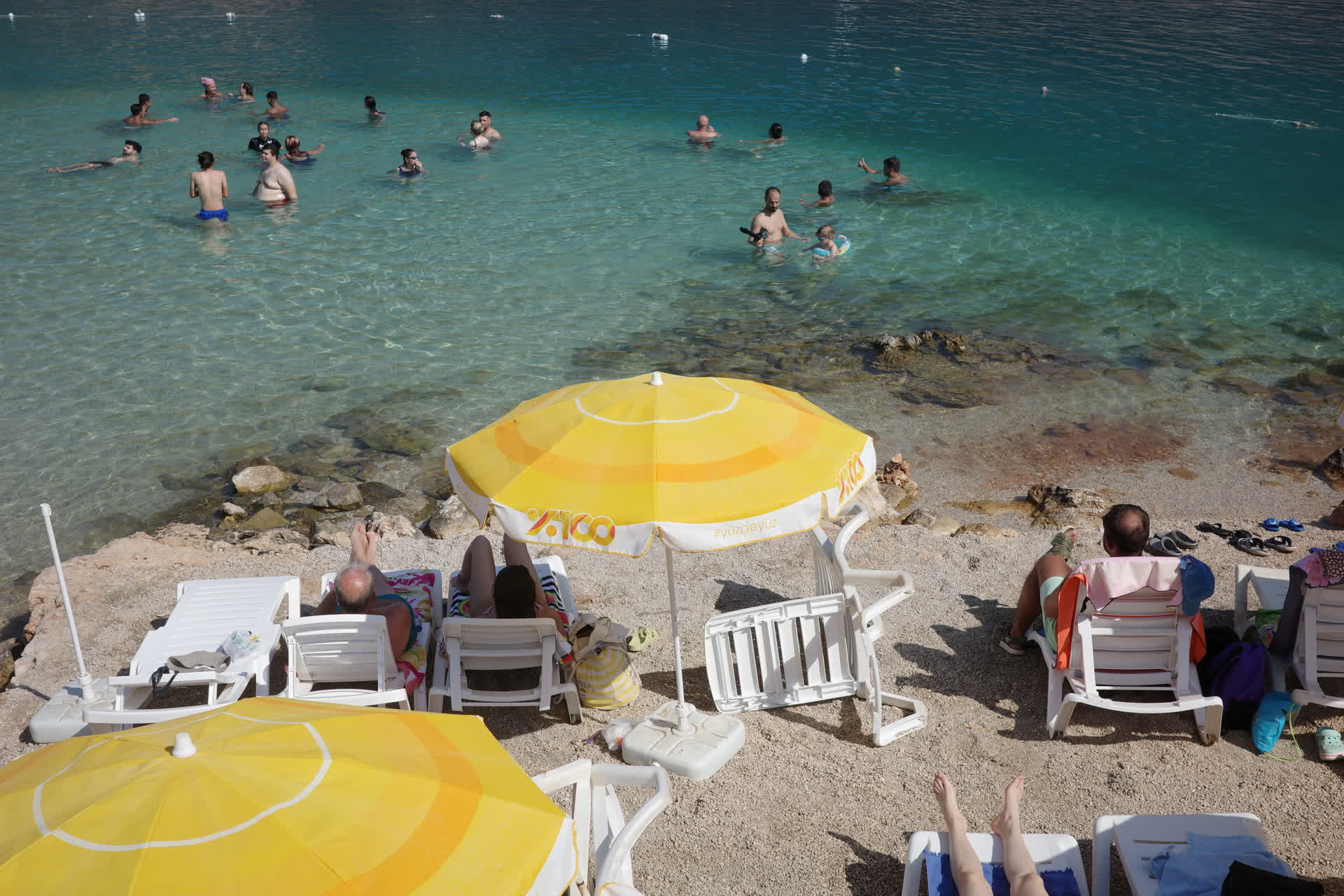
When your feet step onto the pebbles and you walk toward the lower ground, the seawater gradually rises—first touching your toes, then ankles, shins, knees, and finally your thighs and the rest of your body. The sun’s energy is so intense that your skin feels a fine stinging heat, yet the sea, having absorbed all that warmth, turns gentle. No cold shock at all. The moment the skin is submerged, it’s like having a layer of armor on—washing away the burning sensation of the sun.
After the body slowly adapts to the water, the next step is lowering the face, then the entire head, into the sea. Those familiar with the water dive in without hesitation—one quick flip and they’re gone. People like me, on the other hand, soak our bodies first, then hover face-down at the surface, staring at the water in a mild daze. The water is already clear enough to reveal the seabed and rocks, but whether to move closer, I wasn’t sure—maybe because it required mental preparation and a bit of courage.
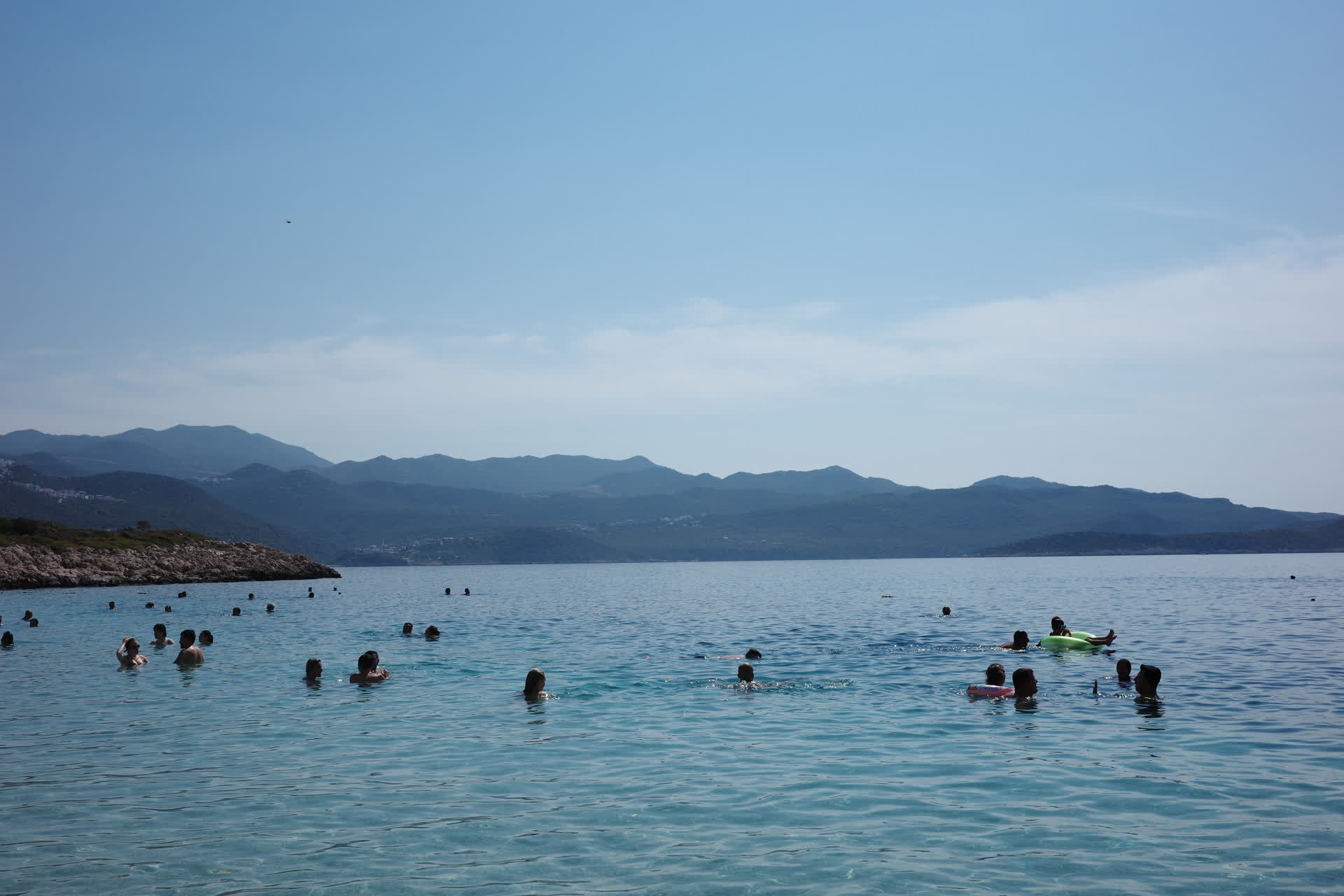
After a small adjustment of the snorkel mask, I slowly lowered my face into the water. First the nose and mouth, then the cheeks, then the ears, and finally the whole head. With a bit of attention, you realize the senses are linked—when even a tiny patch of skin enters the water, it somehow feels as if your entire face has gone under. Of course, that’s just an illusion. One shouldn’t panic because of it and jerk back above the surface; you must keep pushing downward until all your senses are sealed inside the water.
The warmth of the sea didn’t unsettle me. But besides the change in temperature and touch, the biggest shift was in hearing. Human noise disappears instantly. Everything turns quiet, and the sound of waves loops softly around the ears. Occasionally, tiny bubbles crackle somewhere nearby. And if you’re wearing a breathing device—like a snorkel or scuba regulator—the thick, resonating breathing from inside your body becomes the loudest sound of all. Breath, and breath again. A sound long sealed inside the body, now released by water. My body retreated backstage, reduced to a laborer transporting air in and out. All the spotlight fell onto breathing.
I still hadn’t adjusted to this new hierarchy of senses. Unsure how to respond, I simply widened my eyes at the stones and sand on the seabed, letting the sound of my breath drift around me.
My legs pushed gently forward, my head dipped deeper until fully immersed. After taking in enough of the view below, it was time to muster a bit of resolve—pull both legs backward and let buoyancy lift my body up. Lifted, the body wasn’t straight but slightly wobbly, limbs bent into a swimming posture, ready to explore the shallow underwater world.
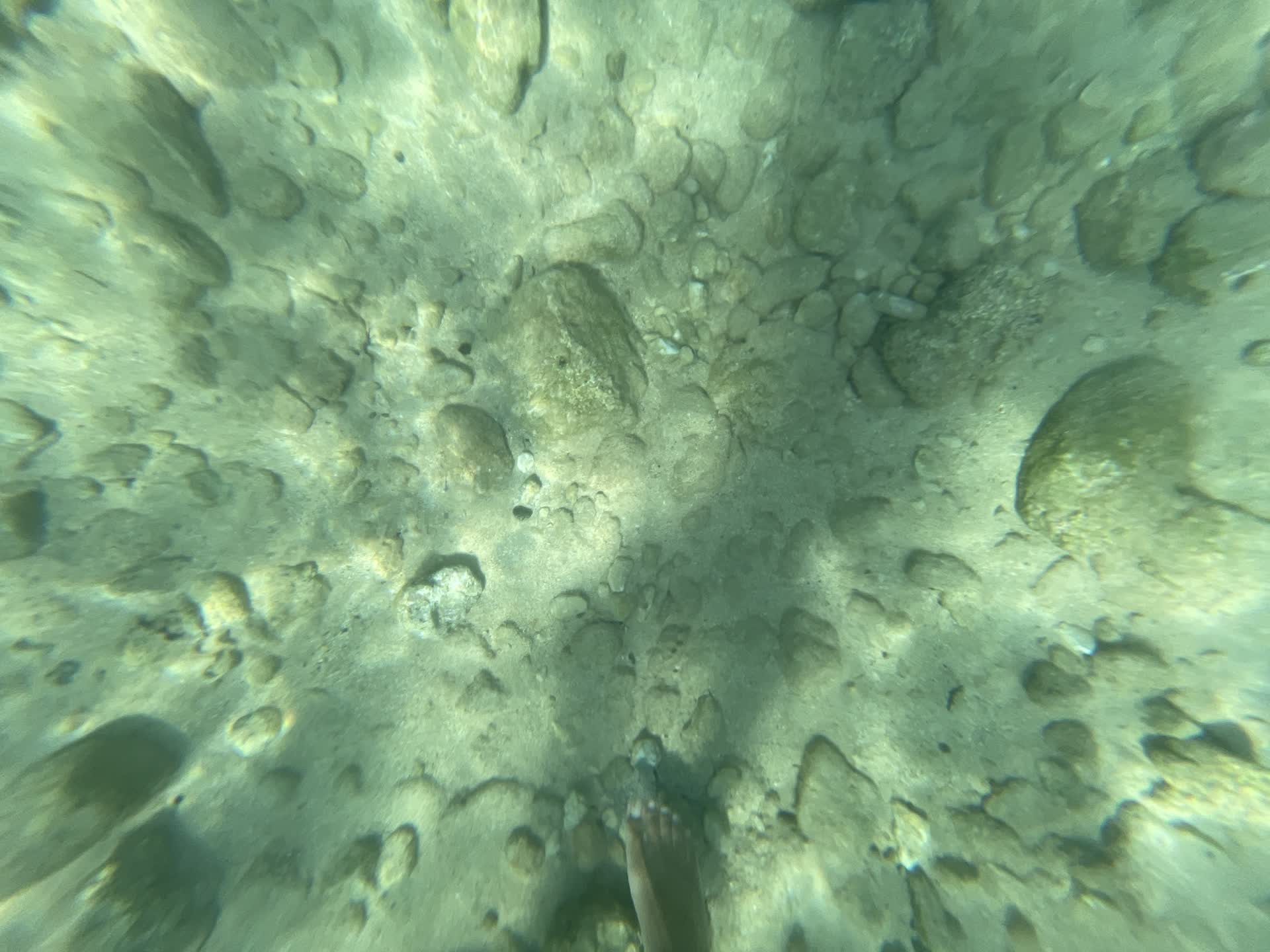
Because of the terrain and shifting perspectives, the underwater scenery felt elusive; entering from different spots revealed completely different worlds.
Snorkeling from the beach, there wasn’t much seaweed—mostly sand and stones settled on the seabed. As you moved farther from shore, the ground deepened and large reefs began to appear. You could clearly see how the light scattered, the distance dimming into dark shades, the reefs turning almost black, hidden behind the deeper sea. Floating on the surface, staring down into that expanding darkness, I felt an illusion—the earth continued downward, while I was rising into the sky. The dark canyon ahead grew larger, and fear rose with it. I was small, using so much strength to swim forward, yet barely moving—my energy devoured by the deep sea’s darkness. So I decided not to go further. I turned back—climbing upward again, back to the shallows, back to the sand and the shore.
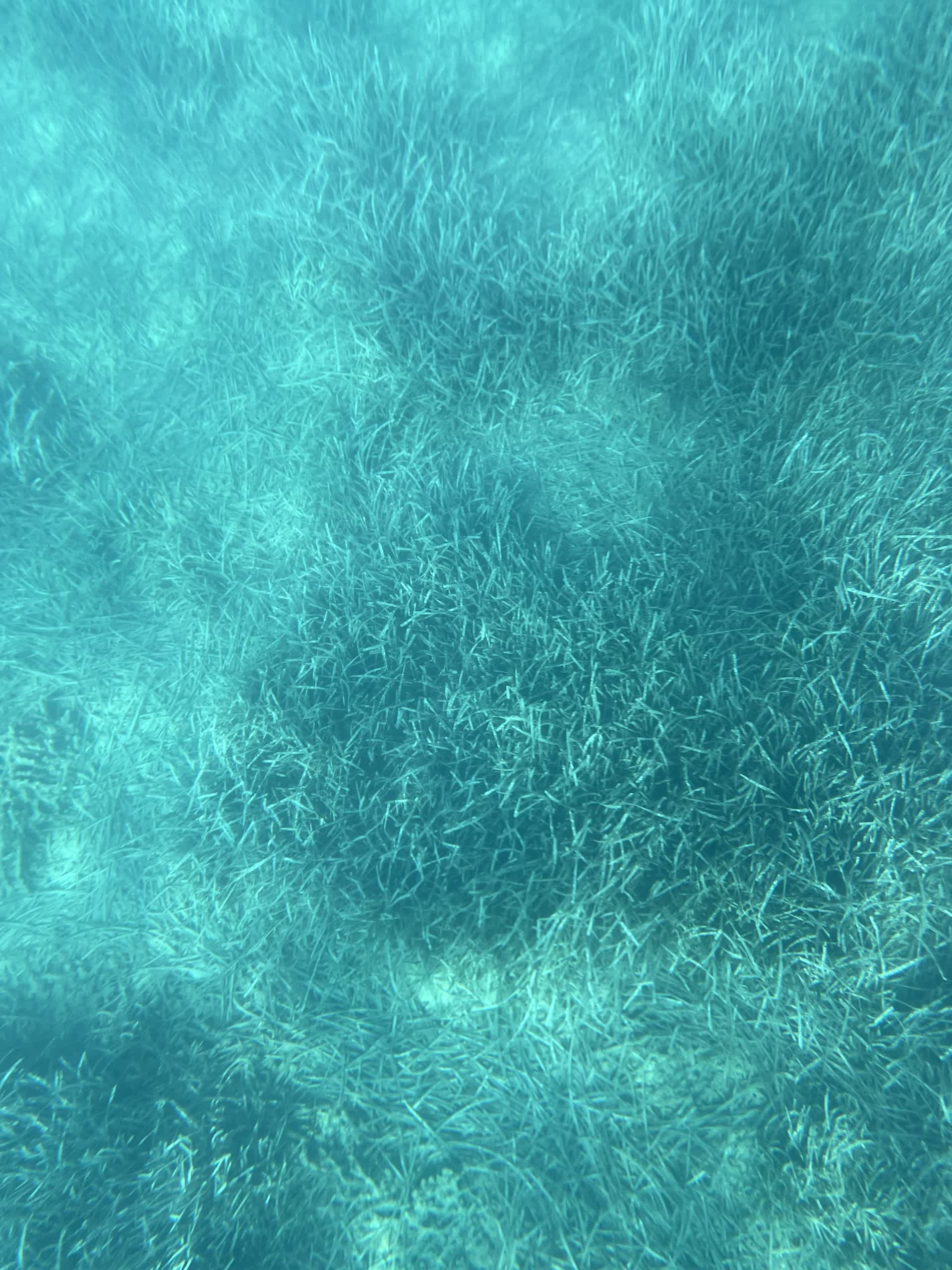
Compared to the beach, snorkeling at the coves visited on a Boat Trip showed a different landscape. Those spots must have been carefully chosen by captains and guides—the underwater world here was richer. Besides smooth sand, there were clusters of sparse seaweed. The reef shapes were more diverse—some natural, others carved by human hands, the remains of submerged ruins. One set of ruins enclosed a rectangular shape, like a sunken swimming pool. Its purpose unknown, its surface uneven and worn. Stepping on it required caution—one careless move could get you scratched.
Maybe because it was farther from people, the fish were more abundant. Not as vibrant or dramatic as aquarium posters—perhaps that’s the difference between filters and reality—but delightful nonetheless. Small fish darted in and out of rock crevices. If you reached toward them, they sensed it instantly and vanished in a flash. Large schools were rare, but I did encounter one. It reminded me of magnetic or electric field lines in physics. Each fish was thin and delicate, bodies drifting with the currents and reflecting light. They were like particle probes—gathering together, flickering rhythmically, tracing the ocean’s flows with elegant precision. Up close, it was intricate and spectacular.
Returning from sea to land, I immediately missed that earlier feeling.
That world was quiet—only waves and my own breath—like I had drawn closer to myself, and to nature. My limbs and torso were free to twist and spin; buoyancy defeating gravity. Standing on land, the body felt grounded again, but strangely heavy, as if the freedom of the soul had slipped away. Besides the waves and wind, there was once again human noise—never something that brings me joy.
The continent stretches on, but I must walk away from it, return to my life—riding my little motorbike, eating my flatbread. I’ll miss all of it.